Domiland
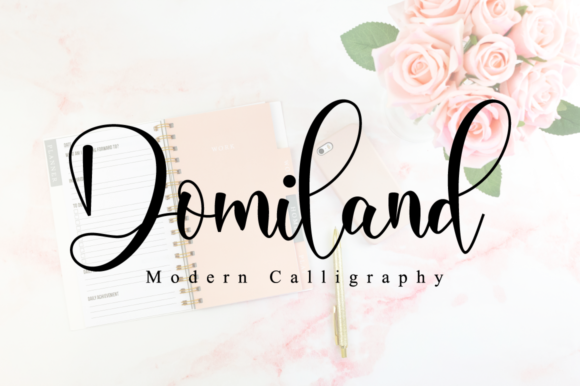
The first time I saw Domiland, it felt like a warm hand reaching out from the page. It’s not just a font—it’s a mood, a voice, a visual signature. The letters flow with a natural rhythm, each stroke carrying a sense of elegance and playfulness that feels both modern and timeless. It’s the kind of typeface that invites you to lean in, to read more, to feel something. For designers, that’s a powerful trait.
Domiland belongs to the Script Handwritten category, but it doesn’t feel like a generic script. There’s a refined quality to its curves and flourishes, as if it was penned by someone who values both artistry and clarity. This balance makes it versatile enough for a range of applications while still maintaining its distinct personality. It’s not just for invitations or social media posts—it has the potential to elevate branding, packaging, and editorial design with a touch of sophistication.
In real-life work scenarios, Domiland shines in projects where a handwritten aesthetic is desired but needs to maintain readability and professionalism. I’ve used it in logo design for boutique brands, where its fluidity adds character without overwhelming the brand’s identity. It also works well in editorial design, especially when paired with a clean sans serif or serif font to create contrast and hierarchy.
For packaging design, Domiland brings a personal touch that can differentiate a product on the shelf. Whether it's a luxury skincare line or a handmade soap brand, the font adds a layer of authenticity and charm. On product labels, it can help convey a sense of craftsmanship, making the item feel more approachable and genuine.
When it comes to digital assets, Domiland performs admirably in web design and social media graphics. Its legibility at smaller sizes is commendable, though it’s best used sparingly in body text. It excels as a display font, perfect for headlines, quotes, or decorative accents. However, I recommend using it with caution in long-form content. It’s a premium font, and its beauty lies in its ability to stand out rather than blend in.
One thing I noticed early on is how Domiland affects readability. In large formats, such as posters or billboards, it maintains its character without losing clarity. But in small sizes, like buttons or navigation menus, it can become less legible. As a designer, I always test fonts in black and white to ensure they hold up under different lighting conditions and print settings. I also check spacing and kerning to make sure the text flows naturally, especially when mixing uppercase and lowercase letters.
Pairing Domiland with other fonts requires careful consideration. It pairs beautifully with a modern sans serif for a balanced look, or with a serif font to add depth and contrast. When used alongside another script font, it can create a cohesive yet dynamic typographic harmony. However, overuse of script fonts can lead to visual clutter, so it’s important to use Domiland strategically.
For brand identity, Domiland can be a strong choice for businesses that want to convey warmth, creativity, and approachability. It’s ideal for lifestyle brands, creative agencies, and independent creators looking to stand out in a crowded market. Its visual personality aligns well with brands that value individuality and artistic expression.
In terms of commercial use, it’s crucial to confirm the licensing before deploying it in client work or business projects. Domiland is a commercial font, which means it can be used across various platforms and mediums, including websites, print materials, and digital products. However, understanding the specific license terms ensures compliance and avoids potential issues down the line.
Designers should also consider testing Domiland in real mockups and prototypes. Seeing how it looks on a physical product or in a digital environment can reveal nuances that aren’t apparent on screen. It’s also worth reviewing how it behaves in different color schemes and backgrounds to ensure it remains readable and visually appealing.
Overall, Domiland is a creative font that offers both style and substance. It’s not just for decorative purposes—it has the versatility to support a wide range of design applications. Whether you're working on a logo, a flyer, or a website header, Domiland can bring a unique flair to your project while maintaining a professional edge.
As a designer, I find Domiland to be a valuable addition to my toolkit. It’s a font that respects both form and function, offering a fresh perspective on modern typography. With the right pairing and application, it can enhance brand identity, improve visual storytelling, and create a lasting impression.